


Herbal Mitra
Sea Buckthorn Pulp
Sea Buckthorn Pulp


Couldn't load pickup availability
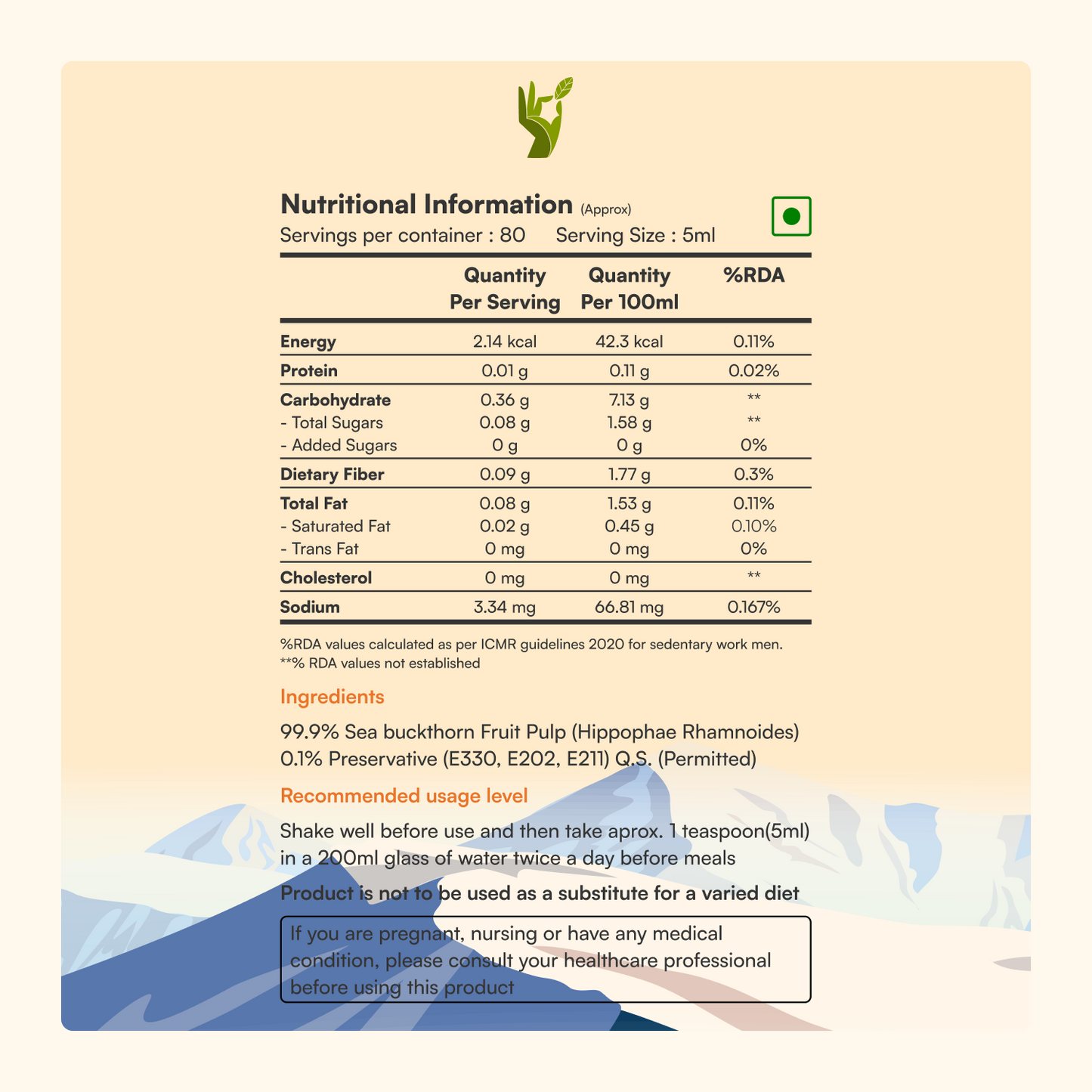
A premium liquid concentrate made from 99.9% Sea Buckthorn fruit pulp, sourced from high-altitude regions of Ladakh (10,500 ft). Naturally rich in plant-based omegas, antioxidants, and bio-active compounds that support daily metabolic and overall wellness.
✔ No added sugar
✔ No synthetic colors
✔ FSSAI approved
✔ Lab tested:
Net Volume: 300 ml
Form: Liquid concentrate


Sea Buckthorn (Hippophae rhamnoides) is a berry-bearing plant that grows in extreme cold and high-altitude regions, most notably in Ladakh, India (10,000+ ft).
Because it survives intense sunlight, freezing temperatures, and poor soil, the plant develops an unusually dense nutritional profile, especially in its berries.
That’s what makes Sea Buckthorn different from regular fruits.
Most fruits give you one or two nutritional benefits.
Sea Buckthorn is rare because it delivers multiple omegas + vitamins in one plant source.
Naturally rich in:
- Omega 3, 6, 7 & 9
- Vitamin C
- Vitamin A, B, D, E & K
- Antioxidants & bio-active phytonutrients
This combination is why Sea Buckthorn is often called the “Indian Superfruit.”
Sea Buckthorn has been traditionally and scientifically studied for its role in:
- Supporting metabolic health
- Helping maintain healthy blood sugar levels
- Supporting heart health
- Supporting skin hydration & mucous membrane health
- Providing antioxidant support
• Nutritional & bio-active composition
Research reviews Sea Buckthorn’s unique mix of antioxidants, vitamins, phytosterols, and fatty acids, and how these contribute to metabolic and cellular health.
🔗 PubMed review on Sea Buckthorn bio-active properties
• Cardiovascular & metabolic health (research context)
Studies have examined Sea Buckthorn compounds in relation to lipid metabolism, LDL cholesterol, vascular function, and fatty liver conditions in experimental and observational settings.
🔗 Hindawi Journal on Sea Buckthorn and cardiovascular health
🔗 NCBI article on Sea Buckthorn and liver health
• Antioxidant, immunity & resilience research
Sea Buckthorn pulp is rich in vitamin C, vitamin E, polyphenols, and carotenoids, which have been studied for reducing oxidative stress and supporting immune-related cellular functions.
🔗 PubMed research on antioxidant properties of Sea Buckthorn
• Skin, gut & mucosal health (functional research)
Scientific and functional-nutrition literature discusses omega-7, fiber, and polyphenols in Sea Buckthorn for supporting skin barrier integrity, gut lining, and mucosal moisture.
🔗 WebMD overview on Sea Buckthorn uses and considerations

Born in Extreme Altitudes ❄️
Sea Buckthorn grows in some of the harshest environments on earth, high-altitude regions with freezing temperatures, intense sunlight, and poor soil.
This extreme survival environment contributes to its naturally dense nutritional and bio-active profile.

Naturally Rich in Rare Omegas 🧬
Sea Buckthorn is one of the few plant sources known to contain a wide spectrum of fatty acids, including Omega 3, 6, 7, and 9.
These compounds are studied for their role in skin, metabolic, and cellular functions.

Backed by Research, Used Traditionally 🧪
Sea Buckthorn has been studied across areas such as cardiovascular health, metabolism, immunity, and gut integrity.
Modern research continues to explore what traditional cultures have valued for generations.
✦ How to consume
Follow these simple steps for best results
Shake the Bottle Well
Sea Buckthorn pulp is a natural concentrate, so the fruit pulp may settle at the bottom. Shake the bottle thoroughly before each use to mix the nutrients evenly
Dilute the Recommended Amount
Take 10–20 ml of Sea Buckthorn pulp and mix it with a glass of lukewarm water. You can also add a teaspoon of honey if you prefer a milder taste
Drink Once or Twice Daily
Consume the mixture once daily, preferably in the morning on an empty stomach to support better absorption and overall wellness
✦ Frequently Asked Questions
For best results, consume once or twice daily, preferably before meals.
Consistency matters more than quantity
Sea Buckthorn works gradually. Most people notice changes after 2–3 months of regular use.
Results may vary depending on lifestyle, diet, and individual body response
Sea Buckthorn pulp is a natural fruit extract and is generally suitable for most adults when consumed in recommended amounts. However, pregnant or breastfeeding women, children, or individuals with medical conditions should consult a healthcare professional before use. If you are taking medication or have specific health concerns, it is advisable to seek medical advice prior to consumption.
Yes, Store the bottle in a cool, dry place away from direct sunlight. Once opened, refrigerate and consume within the recommended period for best freshness. Always keep the bottle tightly closed and use a clean, dry spoon or cap when dispensing the pulp
Blog posts
View all-

From Ancient Tibet to Soviet Space: The Incredi...
Sea buckthorn is not just a fruit. It carries a story that stretches across centuries, cultures, and even beyond Earth itself. Its earliest roots trace back to the Himalayan regions...
From Ancient Tibet to Soviet Space: The Incredi...
Sea buckthorn is not just a fruit. It carries a story that stretches across centuries, cultures, and even beyond Earth itself. Its earliest roots trace back to the Himalayan regions...
-

Nutritional Powerhouse: Why Sea Buckthorn Pulp ...
If you strip away all the stories, traditions, and history, what you are left with is still something remarkable. Sea buckthorn pulp is, quite simply, one of the most nutrient-dense...
Nutritional Powerhouse: Why Sea Buckthorn Pulp ...
If you strip away all the stories, traditions, and history, what you are left with is still something remarkable. Sea buckthorn pulp is, quite simply, one of the most nutrient-dense...
-

Why Sea Buckthorn Juice Is a Powerful Health Bo...
Sea buckthorn juice is not just another wellness trend. For centuries, it has been used in traditional medicine across the Himalayas and parts of Europe as a natural healing tonic....
Why Sea Buckthorn Juice Is a Powerful Health Bo...
Sea buckthorn juice is not just another wellness trend. For centuries, it has been used in traditional medicine across the Himalayas and parts of Europe as a natural healing tonic....


